AU host for Mac: the easiest way to run virtual instruments without a DAW
For many Mac-based creators, the Audio Unit format is at the center of their daily workflow. Synths, drum machines, samplers, orchestral libraries—virtually every modern virtual instrument exists in AU. But while DAWs provide a full production environment, they aren’t always the fastest way to test, play, or layer sounds. Sometimes you simply want to load a virtual instrument, press a key, and create.
That’s when an AU host becomes essential. A dedicated Audio Unit host for Mac lets you run virtual instruments without opening a DAW, giving you a lightweight, frictionless space to experiment. It’s a tool that solves a very specific need and becomes surprisingly important once it enters your setup.
What an AU host actually does
An AU host is a compact application designed to load Audio Unit instruments and effects. It provides the minimal environment a virtual instrument needs: MIDI in, audio out, and a stable container for the plugin’s interface. No timeline, no tracks, no heavy project structure—just the instrument itself.
This is especially useful for AU virtual instruments that don’t include a standalone mode. Without a host, the only way to load them is by launching a DAW, even when all you need is a quick sound check or a rapid comparison between patches.
AU host vs DAW: different tools for different workflows
DAWs are perfect for arranging, mixing, and building full productions. But for early-stage exploration—auditioning sounds, tweaking parameters, sketching harmonies—a DAW can introduce unnecessary weight. Creating a new session, setting up tracks, and routing MIDI adds friction that interrupts flow.
An AU host does the opposite. It opens instantly, consumes far less CPU, and focuses entirely on playability. If your goal is to try virtual instruments quickly or layer multiple sounds without building a full project, an AU host keeps you moving.
Why AU hosts matter for modern creators and sound designers
Sound designers often switch between dozens of virtual instruments when developing new textures. Electronic musicians test multiple synths before committing to a direction. Composers preview articulations and timbres before starting an arrangement. And creators working in live or hybrid setups need a simple way to run virtual instruments outside a DAW.
In all these scenarios, a lightweight AU host becomes a powerful companion. It provides a clean, dedicated environment where virtual instruments can run freely, without the structure or overhead of a project-based workflow.
A new approach to AU hosting on macOS
Most AU hosts available today were built years ago and lack modern features: multi-window workflows, layering, fast switching, or flexible MIDI input. Others feel like utilities rather than creative spaces. Few hosts consider that creators may want to run multiple virtual instruments together, in parallel, without navigating a DAW.
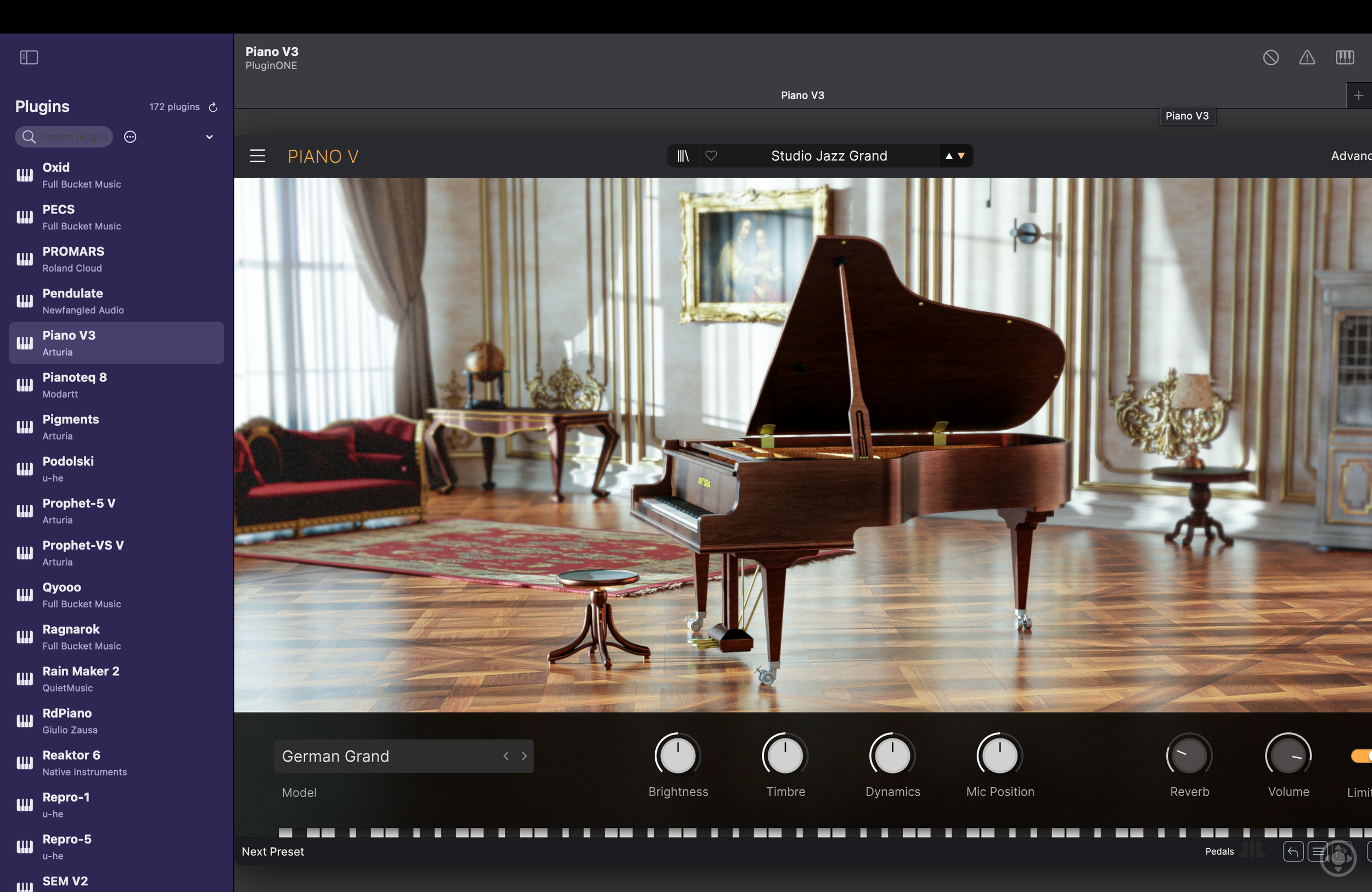
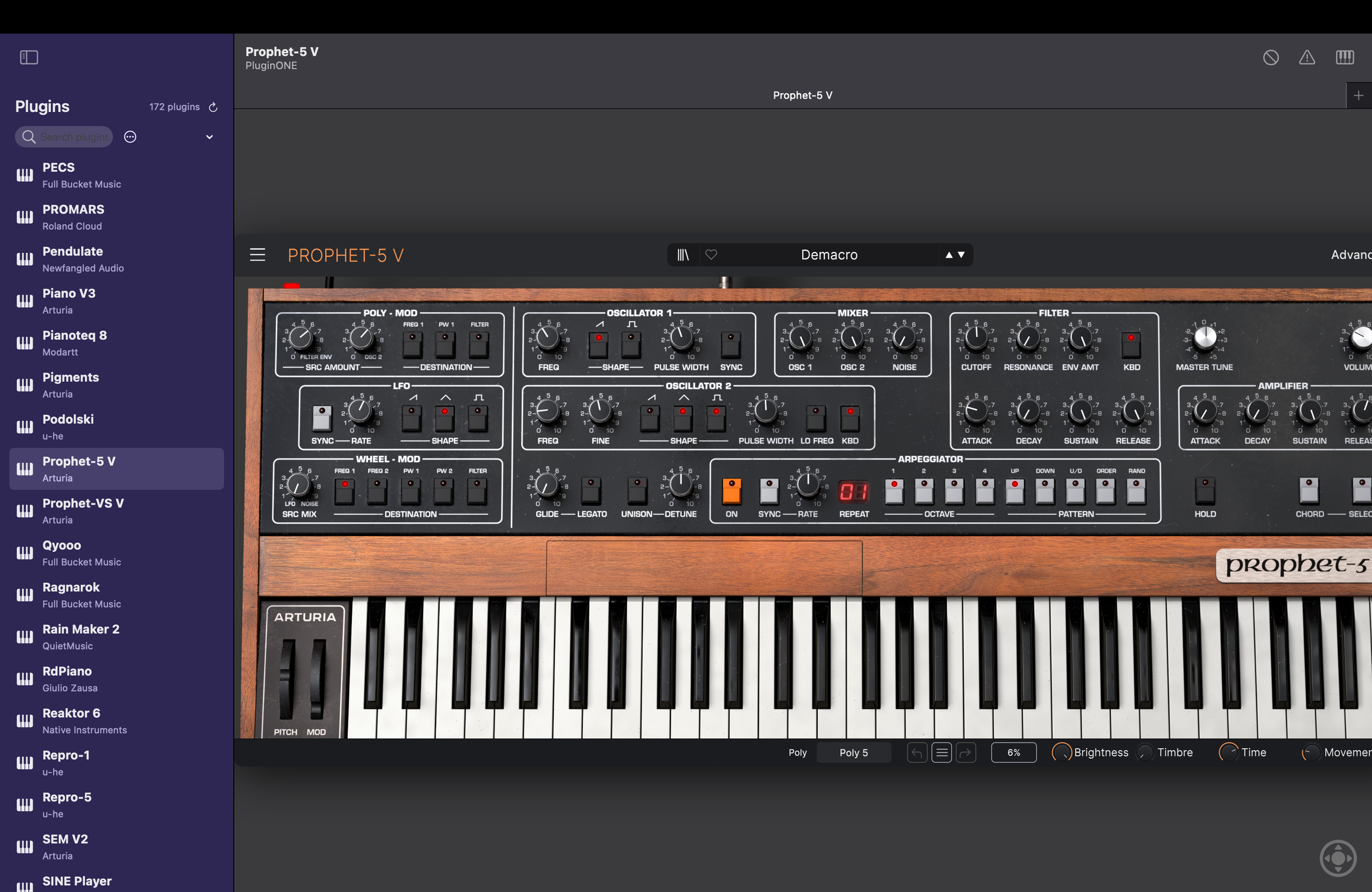
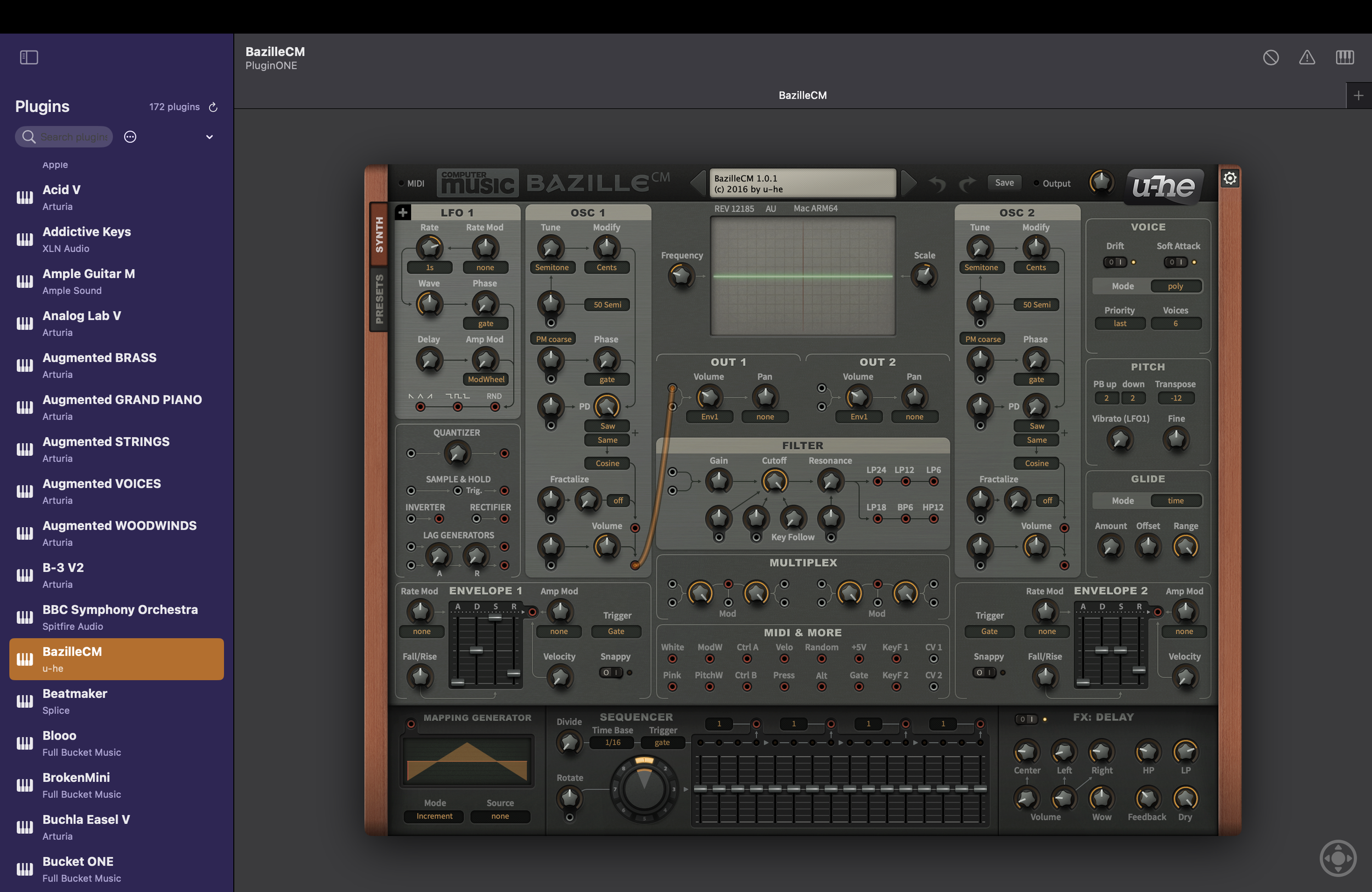
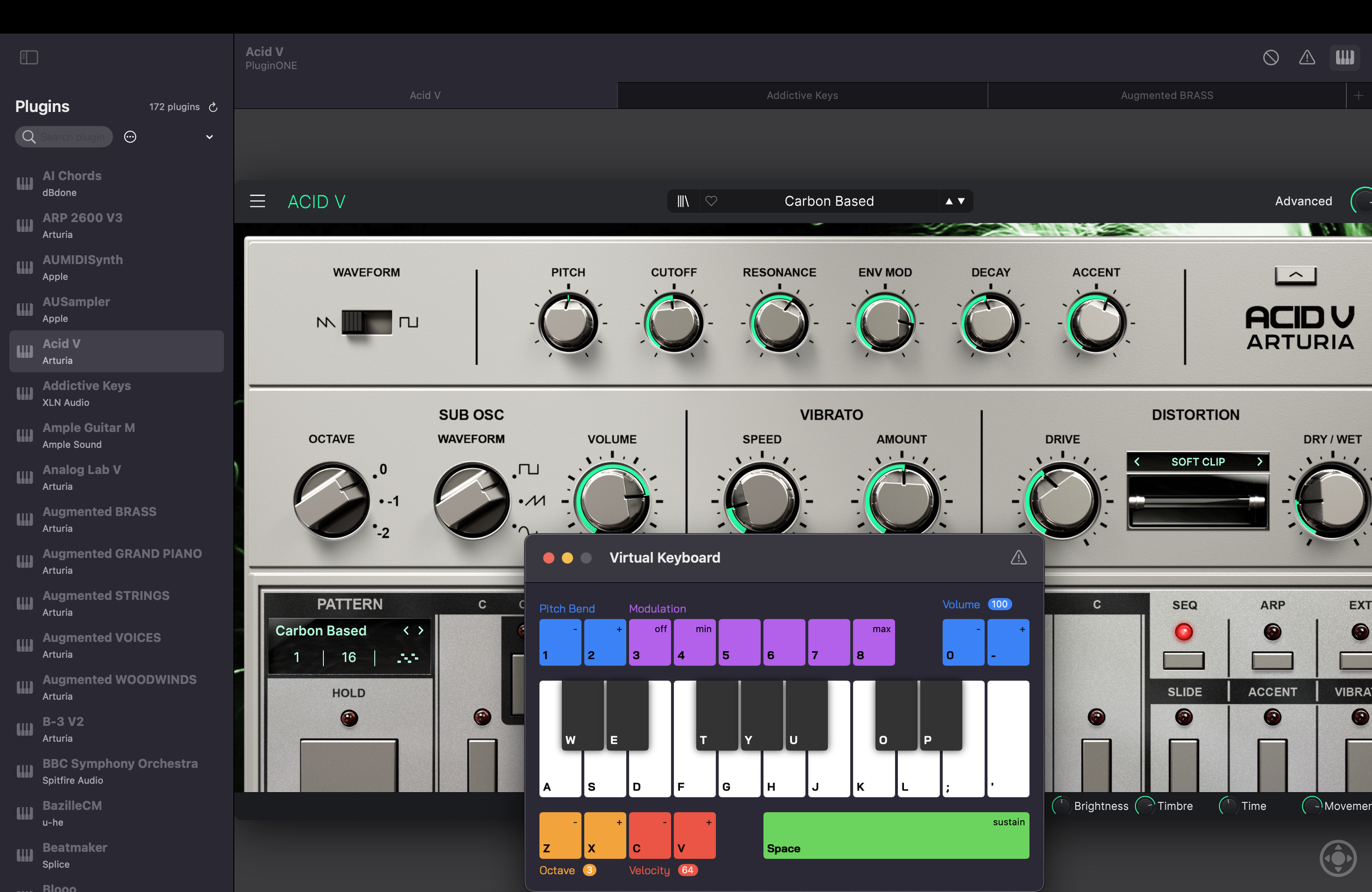
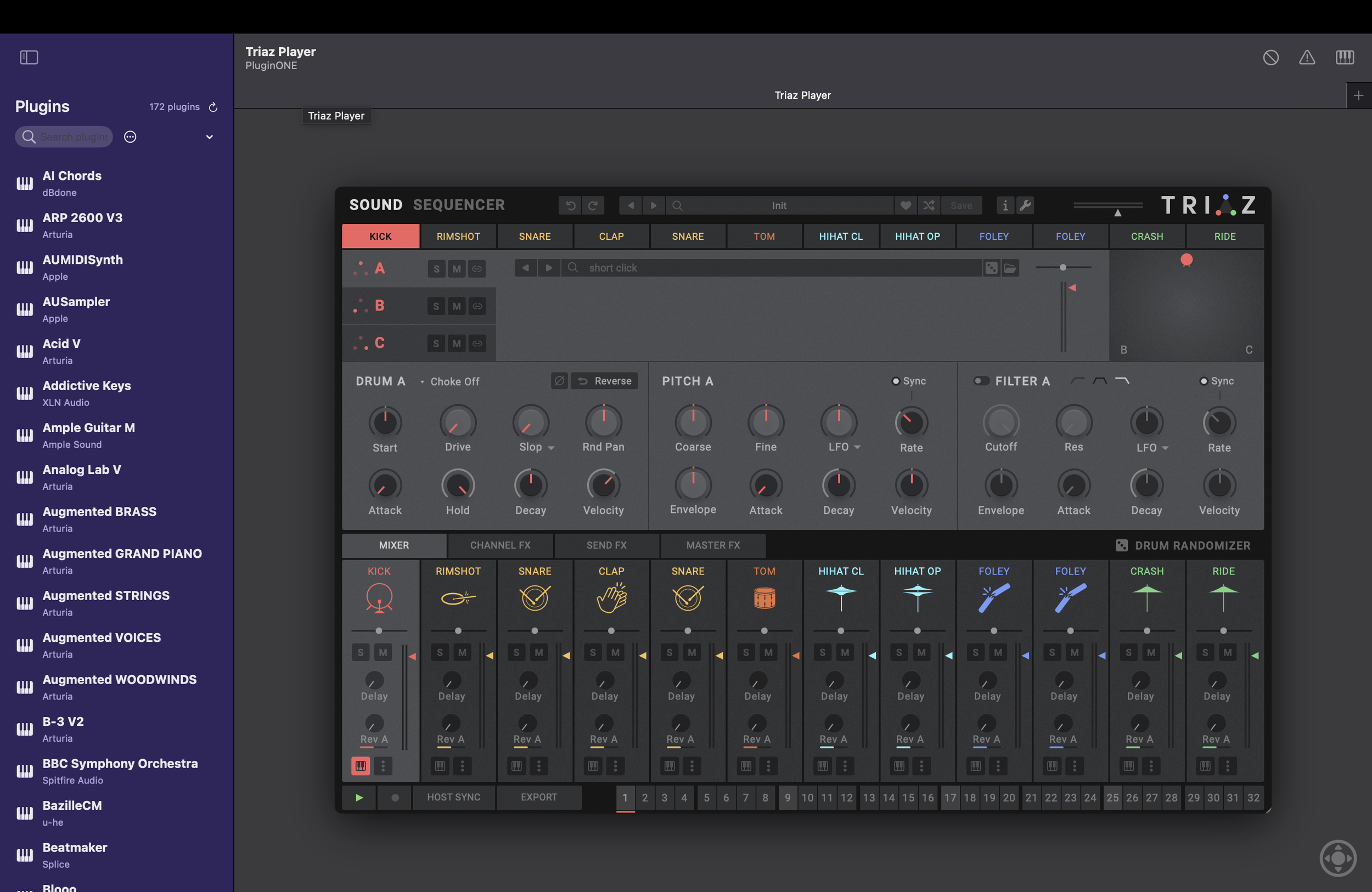
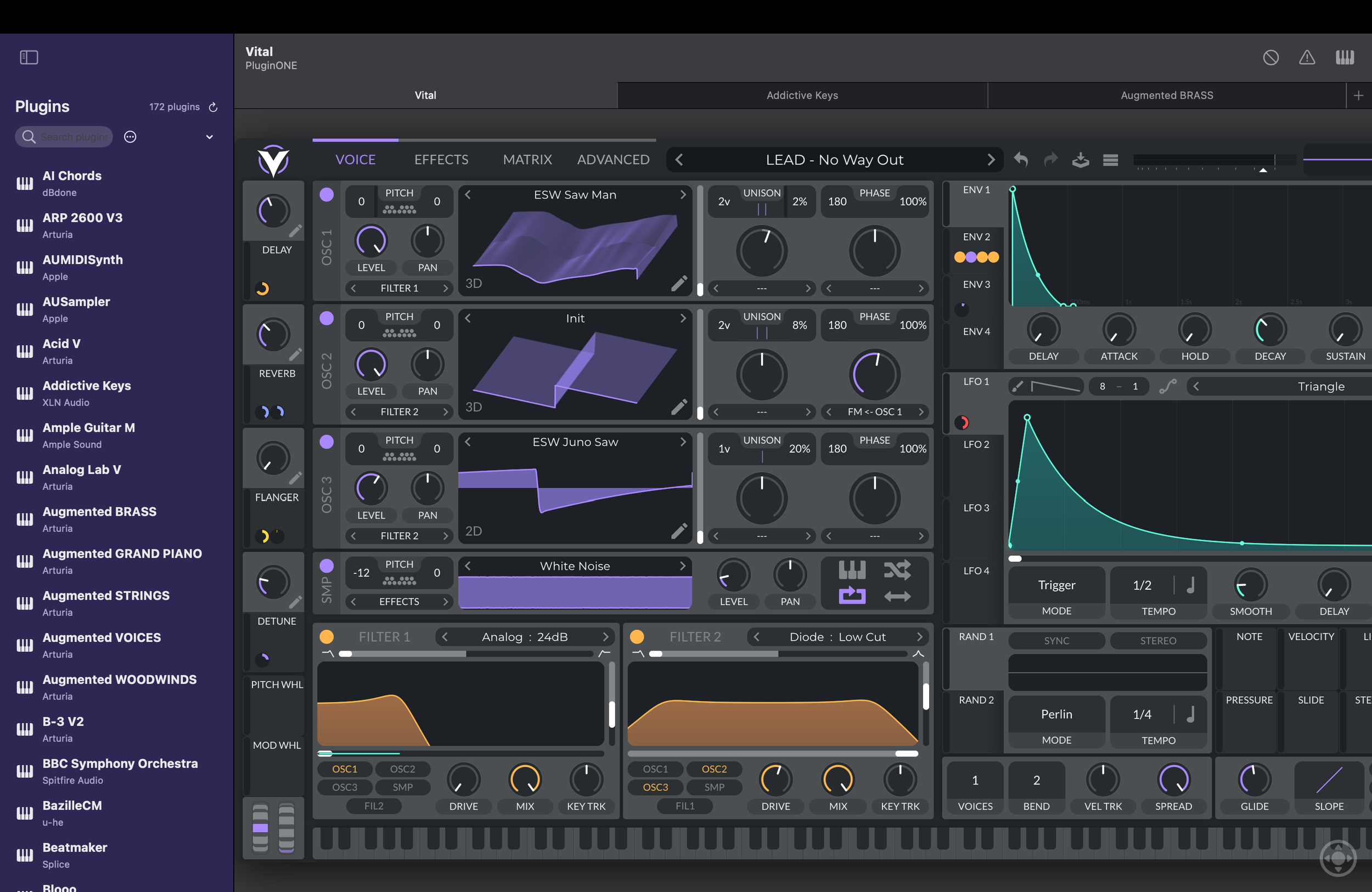
This is where PluginONE® introduces a new direction. Designed by the creators of ONE Instrument®, it offers a clean interface where any Audio Unit virtual instrument can load instantly. Each AU opens in its own window or tab, making it easy to layer sounds or compare different instruments. You can play using the built-in Virtual Keyboard or any MIDI controller, with no routing or setup required.
By focusing on speed and clarity, PluginONE® becomes a practical AU host for Mac—minimal, responsive, and built for creators who rely heavily on virtual instruments.
AU hosts and creative flow
The real value of an AU host lies in efficiency. When loading a virtual instrument takes seconds instead of minutes, you explore more sounds. You build ideas faster. You experiment without hesitation. Creative flow improves not because of complexity, but because friction is removed.
This matters even more today, where musical workflows are hybrid and nonlinear. Creators jump between DAWs, standalone apps, mobile tools, and hardware. A good AU host serves as the connective space that keeps virtual instruments instantly accessible across these environments.
Choosing the right AU host for your setup
If your priority is speed, simplicity, and a clean way to run virtual instruments on Mac without opening a DAW, an AU host is one of the most effective tools you can add to your system. Look for stability, fast loading times, MIDI compatibility, and support for multiple instruments running in parallel—features that transform a utility into a creative partner.
On macOS, PluginONE® stands out by focusing precisely on these needs. It isn’t meant to replace a DAW or compete with one. Its purpose is immediacy, clarity, and musical flow. And for creators who rely on virtual instruments every day, that difference can reshape the way ideas are born.