Virtual Instrument Host: a faster way to play, test and layer sounds on Mac
For anyone working with virtual instruments, there’s a recurring moment that happens dozens of times a day. You hear a sound in your head, or you want to try a plugin you’ve just discovered, or compare two different synths. But before you can even play a note, you’re forced into a structured workflow: opening a DAW, creating a session, setting up tracks, assigning MIDI and routing audio. It’s a process that works perfectly for production, but it introduces friction when your only goal is to explore sound quickly and intuitively.
A virtual instrument host is designed to remove exactly that friction. Instead of building a project, it gives you immediate access to your instruments. You open the app, load a plugin, and start playing. No setup, no waiting, no unnecessary steps. It’s a small shift in workflow, but one that becomes essential once you start relying on virtual instruments daily.
What is a Virtual Instrument Host
A virtual instrument host is a lightweight environment that allows you to load and run plugins without the structure of a full DAW. On macOS, this typically means hosting Audio Unit instruments in a minimal setup that handles MIDI input and audio output, without timelines, arrangement views, or mixing consoles. The focus is entirely on the instrument itself, not on the project around it.
This becomes particularly useful for AU plugins that don’t offer a standalone version. Without a host, they can only be accessed inside a DAW, even when you just want to test a preset or play a few notes. A host makes them immediately accessible, turning every virtual instrument into something you can interact with instantly, without preparation.
Why traditional workflows slow you down
DAWs are built to manage complexity, and they do it extremely well. But that same complexity can become a limitation during the early stages of creation. Every time you open a project, create a track, and configure routing, you introduce a delay between the idea and the sound. Individually these steps are quick, but repeated over time they interrupt flow and reduce spontaneity.
A virtual instrument host removes that layer entirely. It opens in seconds, loads plugins instantly, and lets you focus on sound without thinking about structure. You’re no longer entering a production environment, but a space dedicated to exploration. This distinction matters more than it seems, because it directly affects how often you experiment and how easily ideas emerge.
From production mode to exploration mode
Using a DAW naturally puts you in a production mindset. You start thinking about arrangement, timing, structure, and output. Even when you don’t need to, the interface pushes you in that direction. A virtual instrument host changes that dynamic by removing everything that isn’t directly related to sound.
You can move between instruments without committing to anything, try combinations that wouldn’t make sense in a structured session, and explore textures freely. This creates a more fluid relationship with your tools, where the barrier between idea and execution is almost nonexistent. In many cases, this is where the most interesting ideas are born, before they ever reach a timeline.
Layering and comparison without complexity
One of the most time-consuming aspects of working with virtual instruments is comparing sounds or building quick layers across different plugins. In a DAW, this usually requires multiple tracks, duplicated MIDI, routing adjustments, and constant navigation between mixer and instrument views. It works, but it’s not immediate.
A modern virtual instrument host approaches this differently by focusing on instruments rather than tracks. With PluginONE®, each Audio Unit opens in its own window or tab, making it easy to run multiple plugins in parallel, switch between them instantly, or layer them without building a project structure. What used to be a technical operation becomes a direct creative action, allowing you to focus on sound rather than setup.
A tool that fits modern creative workflows
Today’s creative workflows are increasingly hybrid. You might move between a DAW, standalone apps, mobile tools, and hardware within the same session. Ideas are no longer confined to a single environment, and the tools you use need to adapt to that flexibility.
A virtual instrument host fits naturally into this ecosystem. It becomes the fastest way to access your sounds, whether you’re testing a new plugin, sketching an idea, or preparing material before moving into a full production environment. Instead of replacing your DAW, it complements it by handling the phase where speed and immediacy are more important than structure.
PluginONE®: a modern Virtual Instrument Host for macOS
PluginONE® is built around this concept of immediacy. It doesn’t try to replicate the complexity of a DAW, but focuses on creating a clean, responsive space where virtual instruments can be loaded and played instantly. Any Audio Unit plugin can be opened without configuration, and each instrument runs in its own window or tab, making multi-window workflows simple and intuitive.
The built-in Virtual Keyboard allows you to start playing immediately, even without a MIDI controller, while full MIDI support ensures compatibility with more advanced setups. Features like Tempo Sync extend the experience by aligning arpeggiators, delays, and modulation systems to a shared BPM, creating a more coherent interaction between instruments. The Hold function adds another layer of control, allowing sustained notes and textures while you explore parameters or switch between sounds.
All of this happens without the overhead of a DAW, keeping the experience focused, fast, and uninterrupted.
Speed as a creative advantage
The real value of a virtual instrument host is not just technical, but behavioral. When loading a sound takes seconds instead of minutes, you naturally explore more options. You test more combinations, follow more ideas, and stay inside the creative process longer without breaking concentration.
This has a cumulative effect over time. You become faster not because you rush, but because there are fewer obstacles between you and the sound. The workflow becomes more fluid, and experimentation becomes part of the process rather than something that requires effort.
Where it fits in your setup
A virtual instrument host is not meant to replace your DAW, but to work alongside it. It handles the phase where ideas are still forming, where you need speed, flexibility, and direct access to sound. Once an idea is defined, you can move into a DAW and develop it within a structured environment.
This separation between exploration and production creates a more efficient workflow overall. You don’t overload your DAW with tasks it’s not designed for, and you don’t slow down your creative process with unnecessary setup.
A simpler way to start creating
In a landscape where music software is becoming increasingly complex, there’s growing value in tools that reduce friction instead of adding features. A virtual instrument host does exactly that by focusing on immediacy and playability.
PluginONE® takes this concept and refines it into a modern experience, where virtual instruments are always one step away from being played. No setup, no waiting, no interruption. Just sound, ready when you are.
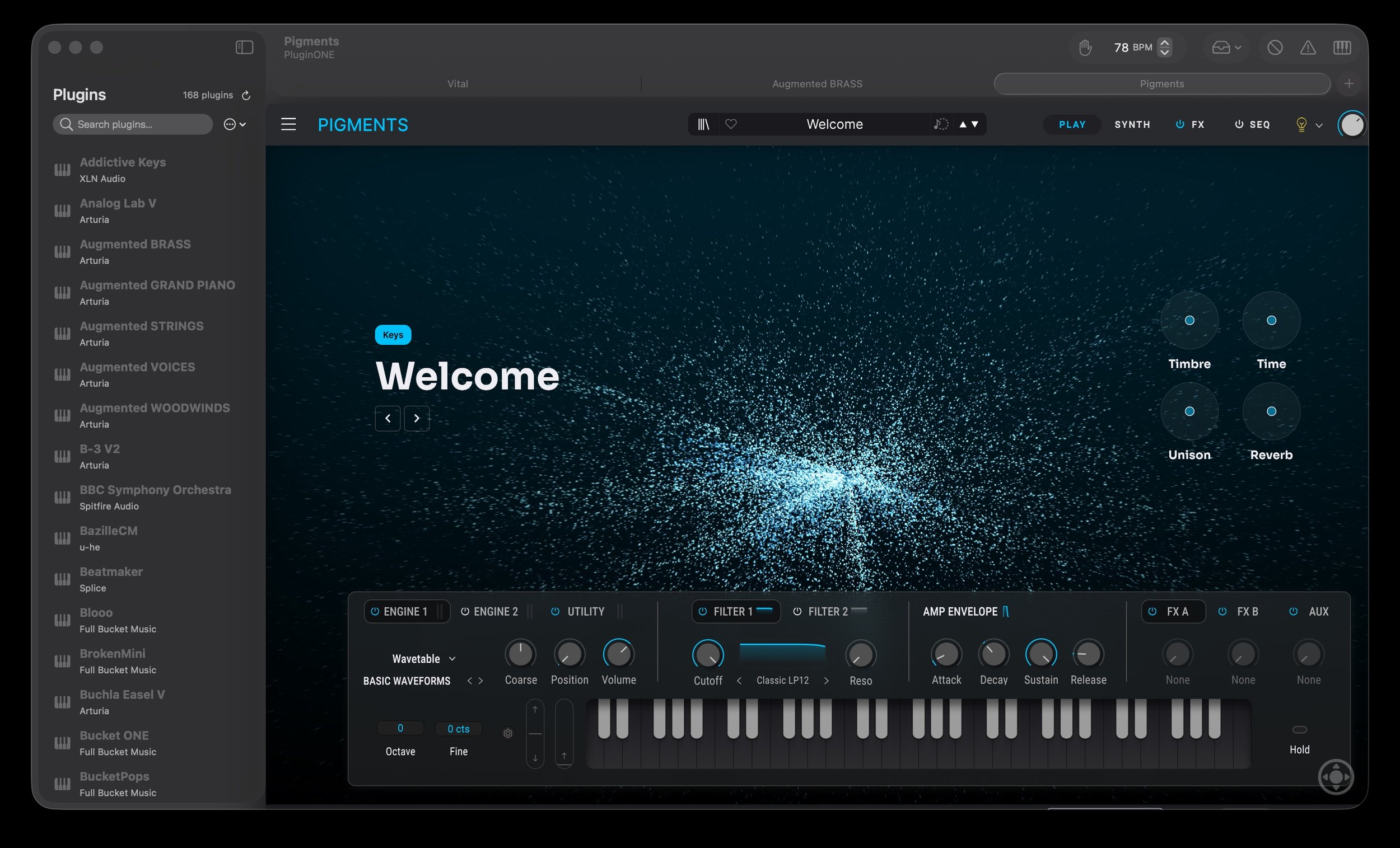
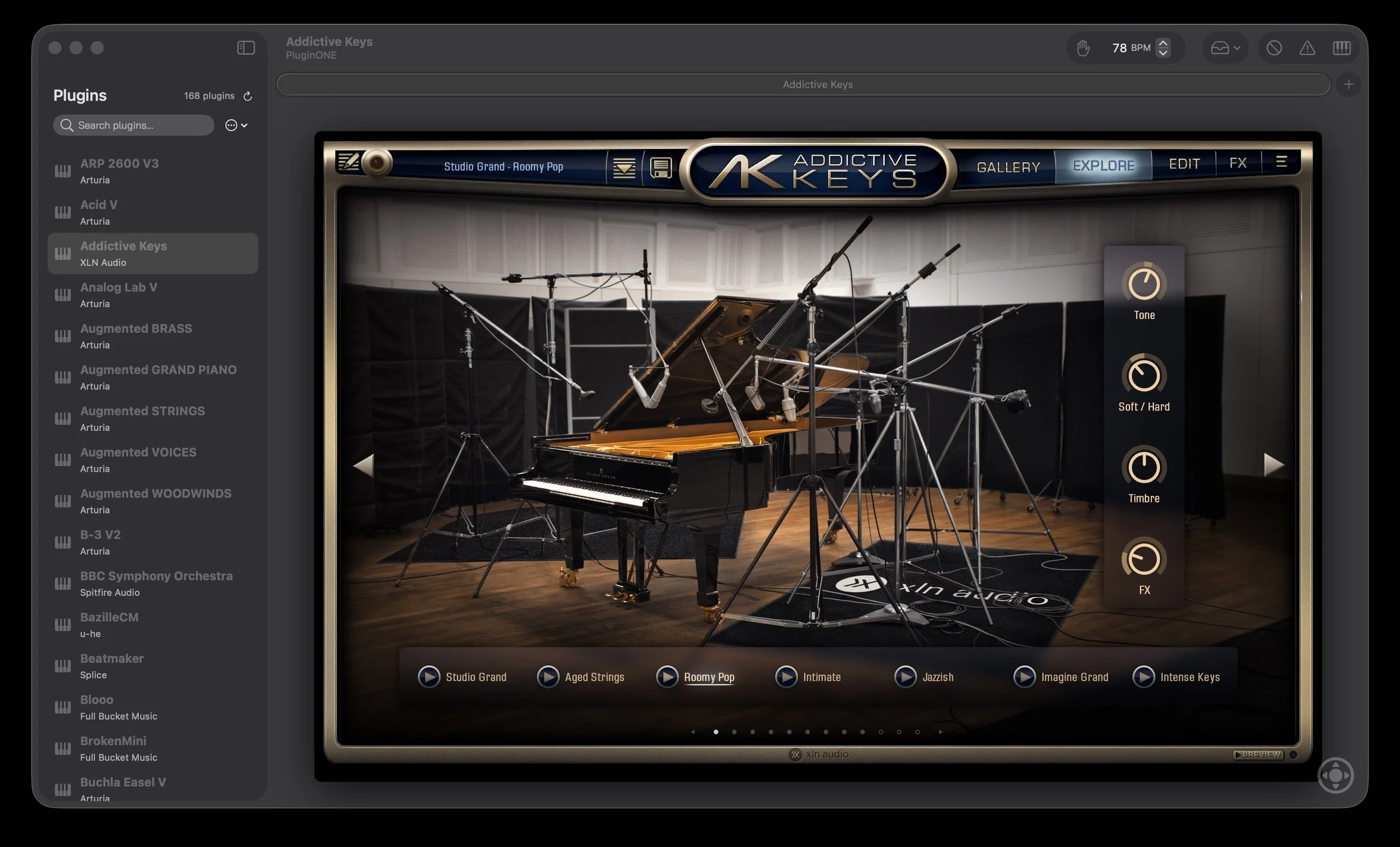
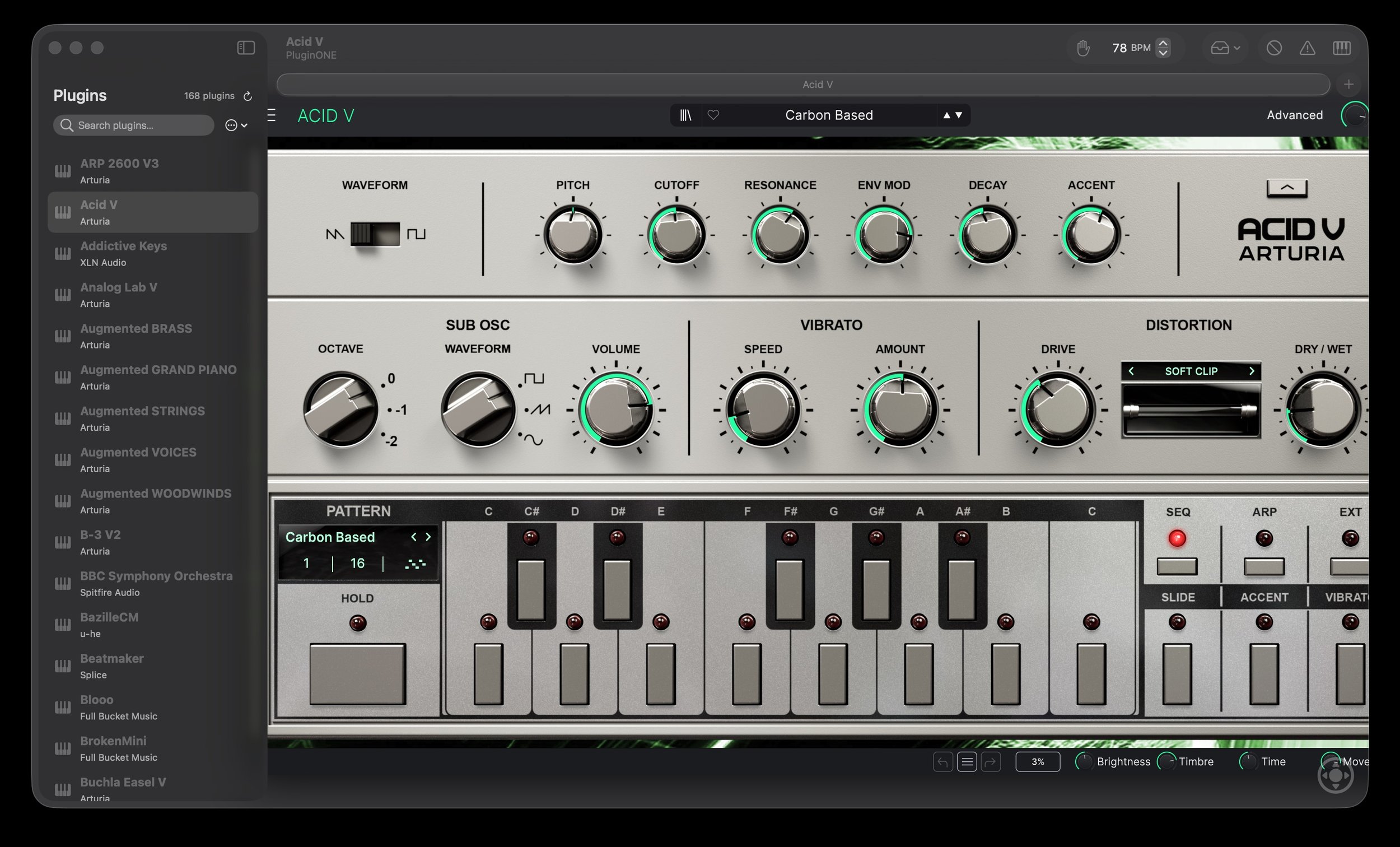
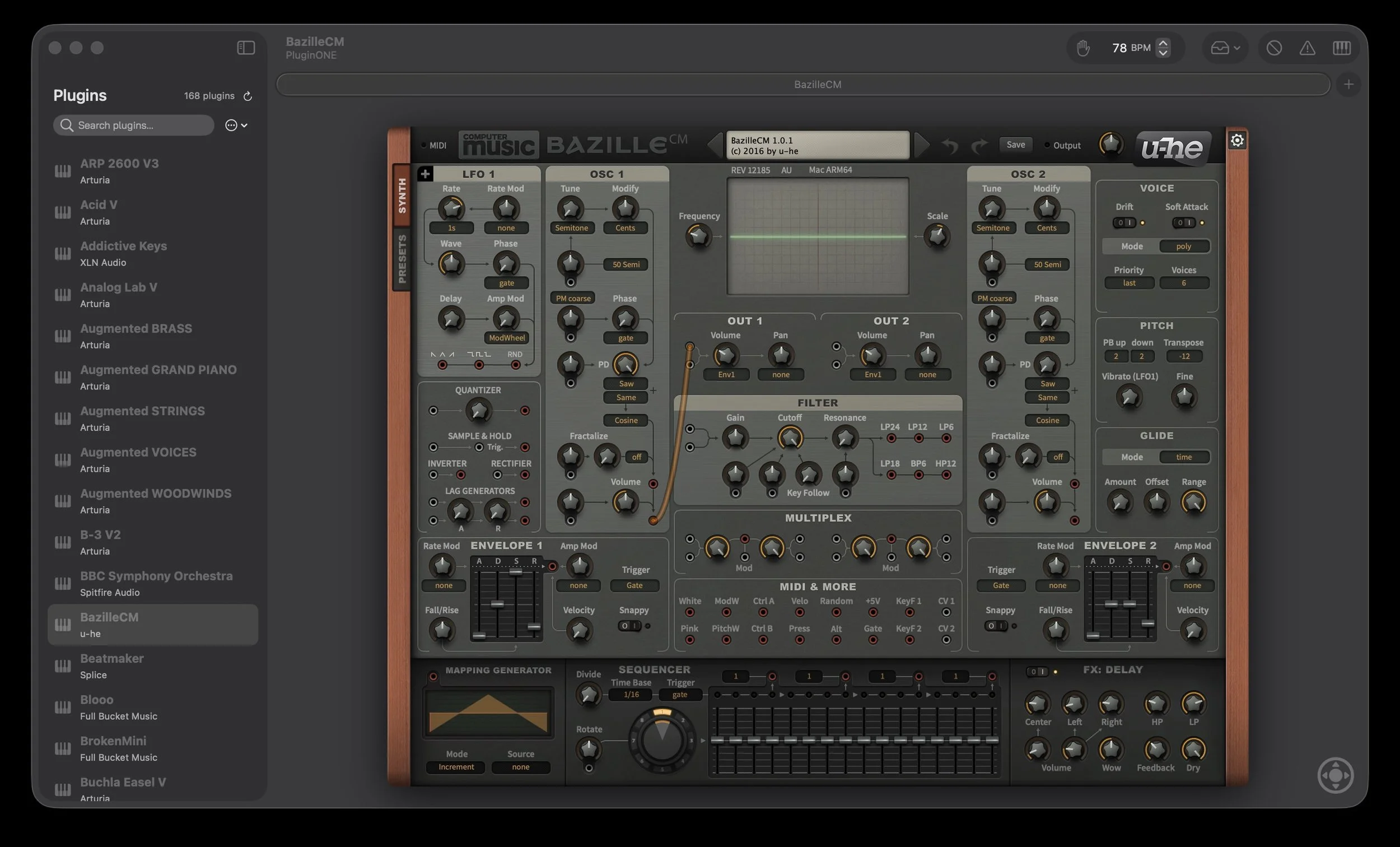
Open your virtual instruments and start playing instantly.